Understanding Minimum Dimensions for Your 2026 ADU or Basement Suite Conversion
Updated Tue, Apr 21, 2026 - 5 min read
Top blog articles
Sponsored Rates for October 2026
Compare Rates for Mortgage, Personal Loans and Home Equity


In the 2026 housing market, the “unpermitted” or “non-compliant” basement suite is a liability. Buyers and AI-driven appraisers are now trained to look for “Technical Compliance”, the specific dimensions that separate a “hobby room” from a “legal bedroom.”
At Kukun, our Addition Calculator is built to help you navigate these margins. We focus on “The Legal Inch” because in 2026, compliance is the difference between a $50,000 equity lift and a $50,000 renovation mistake.
1. The Bedroom Baseline: Minimum Size for Legal Appraisal 2026
To be listed as a “bedroom” on a 2026 appraisal, a room must meet three strict dimensional tests under the International Residential Code (IRC):
- The 70-Square-Foot Rule: The total floor area must be at least 70 square feet.
- The 7-Foot Directional Rule: At least one wall must be at least 7 feet long. You cannot legally count a long, narrow “hallway room” as a bedroom.
- The Ceiling Height Rule: At least 50% of the room must have a ceiling height of 7 feet.
- 2026 Exception: For basements, most jurisdictions allow a reduction to 6’4″ under beams or ductwork, provided the rest of the space meets the 7-foot standard.
2. The Egress Escape: Window Requirements for Basement Suites
Safety is the #1 reason a basement suite fails an audit. In 2026, an “Egress Window” is a non-negotiable legal requirement for any sleeping area.
- The 5.7 Rule: The “Net Clear Opening” (the actual space you can crawl through) must be at least 5.7 square feet (reduced to 5.0 sq. ft. for ground-floor windows).
- The Height and Width: The opening must be at least 24 inches high and 20 inches wide.
- The Sill Height: The bottom of the window cannot be more than 44 inches from the floor.
- Kukun Pro Tip: If your basement sill is too high, you must install a permanent step or platform to be code-compliant. Document this in iHomeManager to prove compliance to your appraiser.
3. The Accessibility Standard: ADA Bathroom Floor Plans
If you are building an ADU in 2026, “Universal Design” is a major value-adder. To be ADA-Compliant (and future-proof your home for aging-in-place), your bathroom must accommodate a wheelchair.
- The 5-Foot Turning Radius: You must provide a 60-inch (5-foot) clear floor space to allow a 180-degree turn.
- Design Hack: The 60-inch circle can “overlap” with the knee space under a wall-mounted sink, but it cannot be blocked by the toilet or an inward-swinging door.
- Doorway Width: A minimum of 32 inches of clear width is required when the door is open at 90 degrees.
2026 Legal Dimension Matrix
| Feature | IRC/ADA Requirement | Why it Matters | PICO™ Impact |
| Legal Bedroom | 70 sq. ft. (min 7′ width) | Required for appraisal count | High (Asset Class) |
| Ceiling Height | 7’0″ (6’4″ for beams) | Habitable space legality | Functional Utility |
| Egress Window | 5.7 sq. ft. opening | Life safety / Fire code | Critical (Compliance) |
| ADA Turning | 60″ Diameter Circle | Accessibility / Aging-in-place | Future-Proofing |
Why “Compliance” is the Best ROI in 2026
In a world of AI-driven appraisals, your home’s data is cross-referenced with local building codes automatically.
- The “Illegal Room” Penalty: If you market a 3-bedroom home, but one bedroom is 68 sq. ft., the AI will automatically re-classify your home as a 2-bedroom, potentially losing you $20,000 – $40,000 in estimated value.
- The Kukun Strategy: Use the Addition Calculator to verify your plans before you pull a permit. By hitting these “Legal Inches,” you ensure that every dollar spent on construction is reflected in your home’s official square footage.
The IRC Standard: Why “Legal” is a Mathematical Requirement
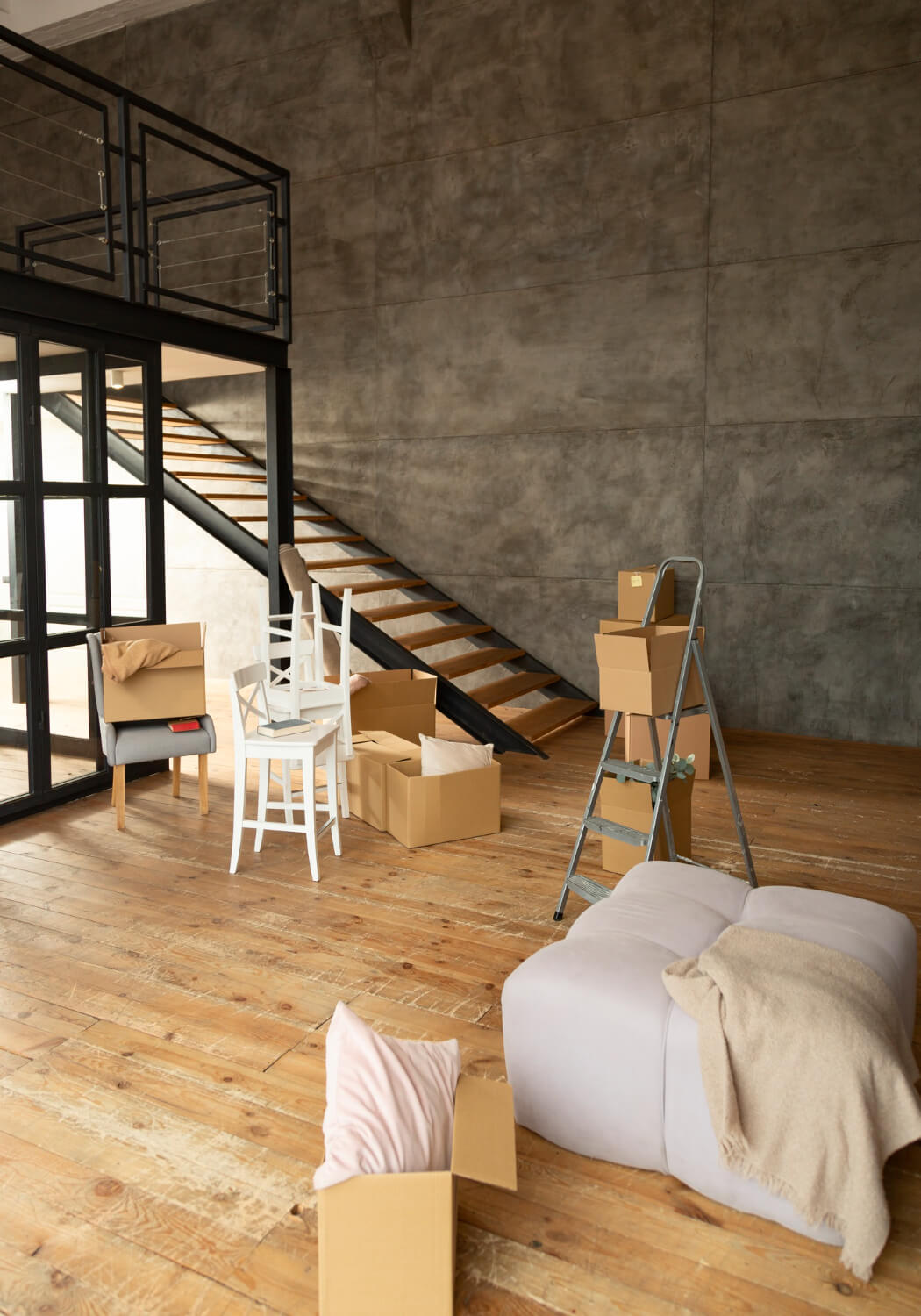
In the eyes of the law, a room isn’t a bedroom just because it has a bed. It must meet the life-safety and dimensional standards set by the International Residential Code (IRC). These codes are designed to ensure that every habitable space has adequate light, ventilation, and a safe means of escape during an emergency.
According to the International Residential Code (IRC) Chapter 3 on Building Planning, the minimum area and ceiling height requirements are non-negotiable for habitable rooms. Failure to hit these specific benchmarks during your ADU or basement conversion means the space cannot be included in your home’s “Gross Living Area” (GLA) during a 2026 appraisal.
FAQs: Designing for Legality
Q: Can a closet count toward the 70 sq. ft. requirement?
A: No. In 2026, the 70 sq. ft. must be habitable floor space. Closets are considered storage, not living area.
Q: Do I need an egress window if my basement has a walk-out door?
A: Yes. Most 2026 codes require every sleeping room to have its own secondary means of escape, regardless of whether there is a door in the main living area.
Q: Is a “T-Shape” turning space acceptable for ADA bathrooms?
A: Yes. If you cannot fit a 60-inch circle, a “T-Shaped” space within a 60″ x 60″ square is a legal alternative under ADA guidelines.
Q: What happens if my ceiling is only 6’10”?
A: It will likely be classified as “finished storage” rather than “habitable living area,” meaning it will be valued at a much lower rate per square foot.
Read more: How to legalize unpermitted renovations
The Verdict: Measure Twice, Appraise Once
In 2026, the tape measure is a financial tool. By mastering the “Legal Inch” and ensuring your ADU or basement suite hits the 70 sq. ft., 7-foot, and 5.7 sq. ft. marks, you are securing your equity against future audits. Use the iHomeManager to store your “Final Inspection” photos and permit approvals; they are the only proof that your “Technical Reality” matches your “Appraised Value.”

Written by Alejandro Guerrero. April 14, 2026
With a mixed love between the sciences and the arts and a passion for reading, Alejandro has developed a background that allows him to discuss many subjects. Being home design one of them, he likes to share thoughts and tips on how to not to forget that those buildings we live in are our homes at the end.
Top blog posts










See more >
Recommended

Join our newsletter
Get helpful renovation tips, insightful home maintenance articles, real estate market trends, and more.
Please enter a name
Please enter a valid e-mail