Why “Heritage Modern” is the Only Design Style That Actually Protects Your Equity
Updated Fri, Mar 27, 2026 - 6 min read
Top blog articles
If you feel like every house on your Instagram feed looks exactly the same (white walls, grey floors, and sterile “modern” furniture), you aren’t alone. In 2026, the real estate market is seeing a massive rebellion against the “Fast Furniture” aesthetic. Buyers are exhausted by houses that feel like temporary stage sets. They are searching for Heritage Modern.
Heritage Modern is the design world’s answer to our craving for history. It combines the structured elegance of the Art Deco revival with the organic, cozy layers of a Modern English Country kitchen. But for the savvy homeowner, this isn’t just about aesthetics. It’s a strategic financial move.
At Kukun, we use the PICO™ Property Condition Score to track how materials age. What the data shows is clear: “Timeless” natural materials like real stone, solid wood, and unbaked brick hold their value significantly better than man-made, trendy fabrications. Here is why Heritage Modern is the ultimate equity-protection strategy.
The Pillars of Heritage Modern in 2026
To achieve this look without your home feeling like a museum, you need to balance two distinct styles.
1. The Art Deco Revival: Structure and Glamour
We aren’t talking about Great Gatsby-themed parties. The 2026 Art Deco revival is about geometric integrity. Think fluted wood cabinetry, arched doorways, and bold, symmetrical brass hardware.
- The ROI Play: Architectural details like arches or furred-out walls that create niches add “permanent” value that won’t go out of style when the next color of the year is announced.
2. Modern English Country: Warmth and Texture
The “English Country” side brings the soul. This involves Modern English Country kitchen designs featuring shaker cabinets in deep “heritage” colors (forest greens, burgundies), open shelving with aged brass rails, and the return of the “working” pantry.
- The ROI Play: This style prioritizes “living” materials that patina, meaning they actually look better as they age, increasing your home’s character over time.
The Power of “Real” Materials: ROI of Natural vs. Synthetic
One of the biggest equity killers is the use of “imitation” materials. In 2026, the market for “LVP” (Luxury Vinyl Plank) is cooling as buyers realize it cannot be refinished and eventually ends up in a landfill.
Terracotta Tile Trends 2026
Terracotta is seeing a 1,100% increase in search volume. Why? Because it’s an “honest” material. Whether it’s in a mudroom or a kitchen, real terracotta offers a warmth that porcelain imitations can’t replicate.
- Cost: $10 – $25 per square foot.
- Equity Benefit: Natural stone and clay tiles are considered “Permanent Improvements” that boost your PICO™ score into the High/Luxury tier.
Solid Wood vs. Engineered
Heritage Modern demands real wood. Reclaimed beams or solid oak floors aren’t just floor coverings; they are structural assets.
Homes with documented “Natural Material” finishes see a 12% higher resale value in competitive markets compared to homes with synthetic finishes.
How to Execute Heritage Modern Room-by-Room
The Kitchen (The English Country Heart)
- The Must-Have: A large, unlacquered brass faucet and a deep apron-front sink.
- The Texture: Use Terracotta tiles for the flooring or a zellige tile backsplash for that hand-crafted, “imperfect” feel.
- Read more: 2026 Kitchen Renovation Cost Guide
The Living Room (The Art Deco Glamour)
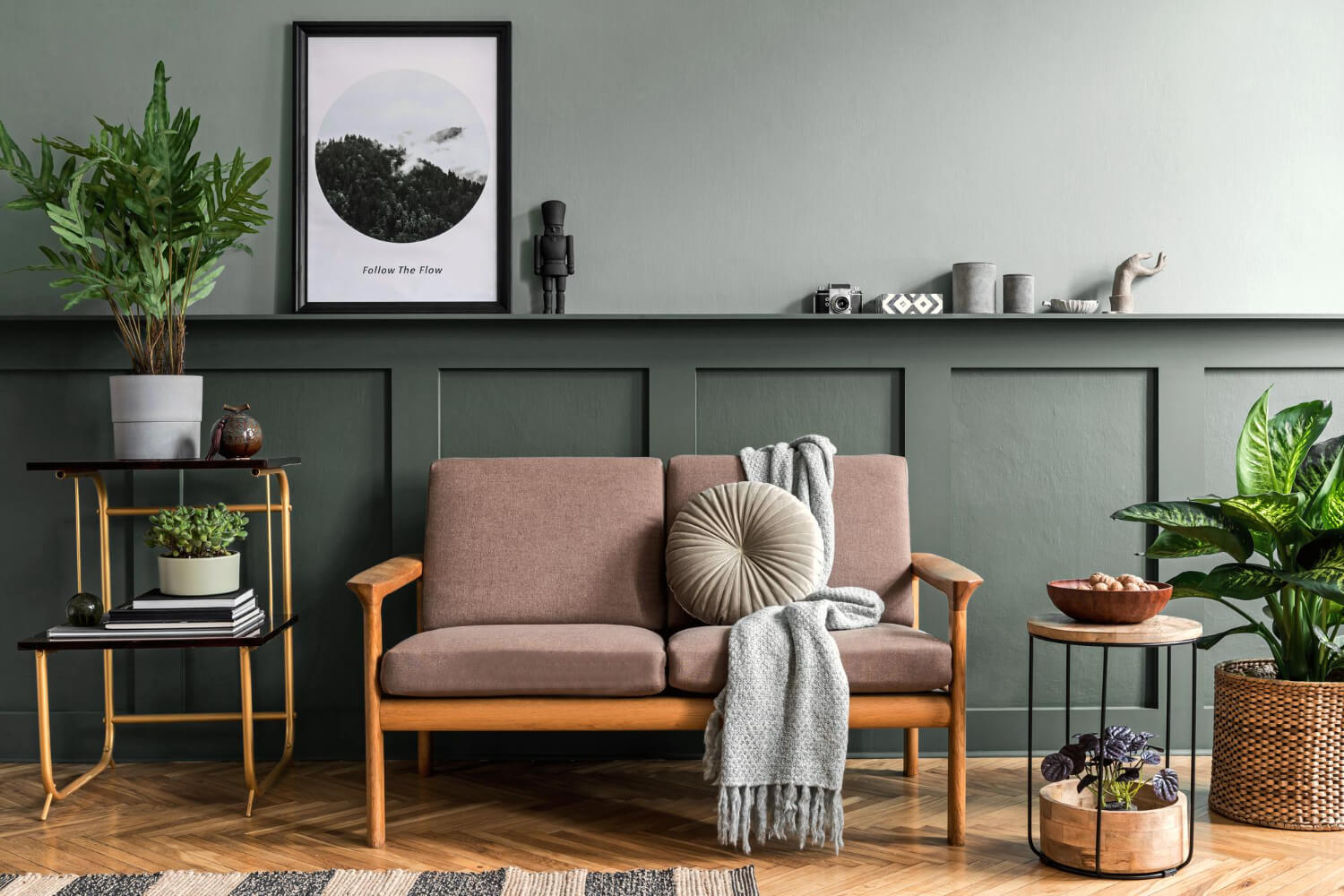
- The Must-Have: Fluted wood detailing on the fireplace or media console.
- The Texture: Velvet upholstery in jewel tones paired with dark, moody wood stains.
The Bathroom (The “Sanctuary” Blend)
- The Must-Have: An arched shower entry or an arched mirror over a vintage-style vanity.
- The Texture: Marble or soapstone countertops with a heavy, visible vein.
- Read more: Bathroom Renovation Cost: 2026 Edition
The Financial Logic: Why Quality Materials Outperform Trends
It’s easy to be swayed by the lower price point of synthetic imitations, but the 2026 market is increasingly rewarding “material honesty.” When an appraiser or a savvy buyer looks at a home, they are looking for longevity.
For a deeper look at the numbers behind these choices, the National Association of Realtors (NAR) publishes an annual Remodeling Impact Report that consistently highlights the “Joy Score” and financial recovery of using authentic materials. According to their research, projects that utilize durable, high-quality finishes—like the natural stone and solid wood central to the Heritage Modern style—not only provide a higher sense of satisfaction for the homeowner but are also viewed by realtors as essential for maintaining property competitiveness in a shifting market.
Quick Reference: Heritage Modern vs. Fast Fashion Design
| Feature | Heritage Modern (Timeless) | Fast Fashion (Trendy) |
| Primary Material | Terracotta, Marble, Oak | LVP, Laminate, MDF |
| Aging Process | Develops Patina (Looks Better) | Degrades/Scratches (Looks Worse) |
| Sustainability | High (Long-lived, Natural) | Low (Plastic-based, Disposable) |
| Equity Protection | High (Boosts PICO™ Score) | Low (Depreciates quickly) |
FAQs: Designing for Longevity and Equity
Q: Is Heritage Modern more expensive than standard modern design? A: Upfront, yes. Natural materials like stone and solid wood cost more than laminate and vinyl. However, the Life-Cycle Cost is lower. Because you won’t need to replace a terracotta floor or a marble counter in 10 years, you save on the “Second Remodel” costs.
Q: Will “bold” heritage colors hurt my resale value? A: In 2026, the “all-white” house is actually seen as a risk because it looks dated. High-end buyers are now paying a premium for “Curated Homes.” As long as the colors are grounded in nature (earth tones), they act as a value-add.
Q: How does the PICO™ score value “timeless” materials? A: The PICO™ algorithm rewards durability. Synthetic materials are depreciated faster in our model because they have a fixed lifespan. Natural stone and wood are given a much longer “value life,” which keeps your home’s equity higher for decades.
Q: Can I mix “Modern” with “Heritage”? A: That’s the whole point! The “Modern” part comes from your appliances and lighting. You want a 2026 smart oven and smart utility upgrades housed within a kitchen that feels 100 years old.
The Verdict: Build a Home, Not a Trend
Trend-proofing your home isn’t about avoiding style; it’s about choosing a style that respects the past. By embracing Heritage Modern, you are investing in materials that won’t end up in a dumpster in a decade. You are creating a home that feels like an estate, regardless of its square footage.
In the 2026 real estate market, character is the new currency.
Read more: Use municipal permit data to predict equity spike

Written by Billy Guteng. February 17, 2026
Billy is a content writer for Kukun. He was born in France, and has lived in multiple cities around the world ever since. He loves art, design and architecture as well as construction and real estate.
Top blog posts









See more >
Recommended

Join our newsletter
Get helpful renovation tips, insightful home maintenance articles, real estate market trends, and more.
Please enter a name
Please enter a valid e-mail