HVAC Replacement Cost: Furnace, AC & Heat Pump Prices [2026]
Updated Fri, Mar 27, 2026 - 24 min read
Top blog articles
Is your HVAC system struggling to keep up, driving up energy bills, or simply too old to repair? HVAC replacement is one of the most expensive home maintenance costs, ranging from $3,000 for a basic furnace to $15,000+ for a complete high-efficiency system.
The good news? A new HVAC system can cut your energy bills by 20-40%, paying for itself over 10-15 years while dramatically improving home comfort. Plus, new systems are required to meet modern efficiency standards, ensuring you’re not wasting money on outdated technology.
This comprehensive guide breaks down the true cost of HVAC replacement by system type, size, and efficiency level, including the hidden costs most contractors don’t mention upfront.
Quick Cost Overview:HVAC System Size (Tons) Efficiency Equipment Cost Installation Total Cost Annual Savings Central AC Only 2-5 tons 14-16 SEER $2,000-$4,500 $1,500-$3,500 $3,500-$8,000 $100-$300 Gas Furnace Only 60K-120K BTU 80-96% AFUE $1,500-$4,000 $1,500-$4,000 $3,000-$8,000 $150-$400 AC + Furnace 2-5 tons 14-18 SEER $4,000-$8,000 $3,000-$6,000 $7,000-$14,000 $250-$700 Heat Pump 2-5 tons 14-20 SEER $4,000-$8,000 $2,500-$5,500 $6,500-$13,500 $300-$800 High-Efficiency 2-5 tons 18+ SEER $6,000-$10,000 $3,500-$6,500 $9,500-$16,500 $500-$1,000
Costs vary by home size, system type, and location (±20-30%). SEER = Seasonal Energy Efficiency Ratio, AFUE = Annual Fuel Utilization Efficiency.
Calculate Your HVAC Replacement Cost
Get an instant, size-specific estimate with energy savings projection
Understanding HVAC Replacement Costs
What Drives the Cost of HVAC Systems?
HVAC replacement costs vary dramatically ($3,000-$15,000+) based on several critical factors:
1. System Type
- AC only: $3,500-$8,000 (warm climates)
- Furnace only: $3,000-$8,000 (mild climates with existing AC)
- AC + Furnace: $7,000-$14,000 (most common, cold/hot climates)
- Heat pump: $6,500-$13,500 (mild climates, heating + cooling)
- Dual fuel: $8,000-$16,000 (heat pump + gas furnace backup)
2. System Size (Tonnage)
- 1.5-2 tons: $3,500-$7,000 (apartments, 600-1,000 sq ft)
- 2.5-3 tons: $4,500-$9,000 (small homes, 1,000-1,800 sq ft)
- 3.5-4 tons: $5,500-$11,000 (average homes, 1,800-2,500 sq ft)
- 5 tons: $7,000-$14,000 (large homes, 2,500-3,500 sq ft)
- 6+ tons: $9,000-$18,000+ (very large homes, 3,500+ sq ft)
3. Efficiency Level (SEER Rating)
- 14-15 SEER: $3,500-$7,000 (minimum legal, basic)
- 16-17 SEER: $5,000-$10,000 (good efficiency)
- 18-20 SEER: $7,000-$13,000 (high efficiency)
- 21+ SEER: $9,000-$16,000+ (ultra-high efficiency)
4. Brand & Quality
- Budget brands: Goodman, Amana, Coleman
- Mid-tier brands: Rheem, Ruud, York, Trane
- Premium brands: Carrier, Lennox, American Standard, Bryant
5. Installation Complexity
- Straightforward replacement: Baseline cost
- Ductwork modifications: +$1,500-$5,000
- Electrical upgrades: +$500-$3,000
- Zoning systems: +$2,000-$7,000
- Air quality add-ons: +$500-$3,000
HVAC System Cost Breakdown by Type
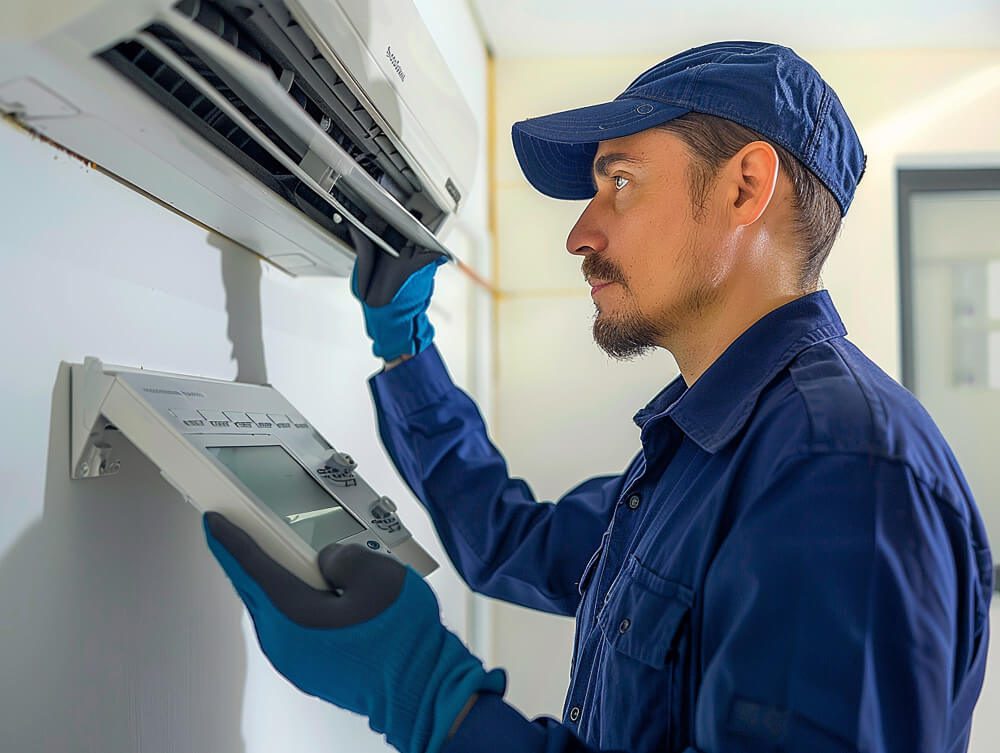
1. Central Air Conditioner Only: $3,500-$8,000
When you need AC only:
- The existing furnace works fine
- Warm climate (minimal heating needs)
- Heat provided by other systems (baseboard, radiant)
Central AC Cost by Size & Efficiency:
| Home Size | Tonnage | 14 SEER | 16 SEER | 18 SEER | 20+ SEER |
|---|---|---|---|---|---|
| Small (600-1,000 sq ft) | 1.5-2 ton | $3,500-$5,000 | $4,000-$6,000 | $5,000-$7,500 | $6,000-$9,000 |
| Medium (1,000-1,800 sq ft) | 2.5-3 ton | $4,000-$5,500 | $4,500-$7,000 | $5,500-$8,500 | $7,000-$10,500 |
| Large (1,800-2,500 sq ft) | 3.5-4 ton | $4,500-$6,500 | $5,500-$8,000 | $6,500-$10,000 | $8,500-$12,000 |
| Very Large (2,500+ sq ft) | 5+ ton | $5,500-$8,000 | $7,000-$10,000 | $8,500-$12,000 | $11,000-$15,000 |
What’s Included in AC Installation:
Equipment: $2,000-$5,000
- Outdoor condenser unit
- Indoor evaporator coil
- Refrigerant lines
- Thermostat (basic)
Labor: $1,500-$3,000
- Remove the old unit
- Install a new condenser
- Install/replace evaporator coil
- Connect refrigerant lines
- Electrical connections
- Test system
Additional Costs:
- Thermostat upgrade (programmable/smart): $150-$500
- Refrigerant line replacement: $500-$1,500
- Concrete pad: $150-$400
- Electrical disconnect: $100-$250
- Permits: $100-$400
Energy Savings by SEER Rating:
Example: 3-ton AC, 2,000 sq ft home, hot climate (Phoenix)Old System New System Annual Cost Annual Savings Payback Period 10 SEER (old) 14 SEER $1,575 $300 (19%) 13-17 years 10 SEER (old) 16 SEER $1,400 $475 (30%) 10-13 years 10 SEER (old) 18 SEER $1,250 $625 (38%) 8-11 years 10 SEER (old) 20 SEER $1,150 $725 (42%) 8-12 years
Based on $0.13/kWh electricity, 2,000 cooling hours/year
Key insight: In hot climates, higher SEER pays for itself faster. In mild climates, 16 SEER offers best value.
2. Gas Furnace Only: $3,000-$8,000
When you need a furnace only:
- Existing AC works fine
- Cold climate (minimal cooling needs)
- Furnace reached the end of its life (15-20 years)
Gas Furnace Cost by Size & Efficiency:
| Home Size | BTU Capacity | 80% AFUE | 90-95% AFUE | 96-98% AFUE |
|---|---|---|---|---|
| Small (600-1,200 sq ft) | 40K-60K BTU | $3,000-$4,500 | $3,800-$5,500 | $4,500-$6,500 |
| Medium (1,200-2,000 sq ft) | 60K-80K BTU | $3,500-$5,500 | $4,500-$6,500 | $5,500-$7,500 |
| Large (2,000-3,000 sq ft) | 80K-100K BTU | $4,000-$6,500 | $5,500-$7,500 | $6,500-$9,000 |
| Very Large (3,000+ sq ft) | 100K-120K BTU | $4,500-$8,000 | $6,500-$9,000 | $8,000-$11,000 |
What’s Included in Furnace Installation:
Equipment: $1,500-$4,500
- Gas furnace unit
- Venting system
- Gas line connections
- Basic thermostat
Labor: $1,500-$3,500
- Remove the old furnace
- Install a new furnace
- Connect gas lines
- Install/modify venting
- Electrical connections
- Test and balance
Additional Costs:
- Gas line modification: $500-$2,000
- Venting upgrades (high-efficiency): $500-$1,500
- Humidifier: $400-$1,200
- Air filtration system: $500-$2,500
- Permits: $150-$500
AFUE Efficiency Explained:
AFUE (Annual Fuel Utilization Efficiency) = % of fuel converted to heat
- 80% AFUE: 20% heat loss through venting (standard efficiency)
- 90-95% AFUE: 5-10% heat loss (mid-efficiency, condensing)
- 96-98% AFUE: 2-4% heat loss (high-efficiency, condensing)
Energy Savings Example (2,000 sq ft, cold climate):Old Furnace New Furnace Annual Gas Cost Annual Savings Payback 60% AFUE (old) 80% AFUE $1,500 $375 (25%) 8-12 years 60% AFUE (old) 92% AFUE $1,150 $725 (46%) 6-9 years 60% AFUE (old) 96% AFUE $1,100 $775 (49%) 7-10 years 80% AFUE 96% AFUE $1,100 $275 (20%) 11-15 years
Based on $1.50/therm natural gas, 1,000 therms/year
Key insight: Upgrading from the old 60% furnace offers huge savings. Upgrading from 80% to 96% has longer payback.
3. Central AC + Gas Furnace: $7,000-$14,000
Most common HVAC replacement (complete heating + cooling system)
When you need both:
- Complete system failure
- Both units are old (15+ years)
- Package deal savings (10-15% vs. separate)
- Climate requires both heating and cooling
Complete System Cost by Size & Efficiency:
| Home Size | Tonnage/BTU | Budget (14 SEER/80% AFUE) | Standard (16 SEER/92% AFUE) | High-Eff (18 SEER/96% AFUE) |
|---|---|---|---|---|
| Small (1,000-1,500 sq ft) | 2 ton / 60K BTU | $7,000-$9,500 | $8,500-$11,500 | $10,000-$13,500 |
| Medium (1,500-2,000 sq ft) | 3 ton / 80K BTU | $8,000-$11,000 | $9,500-$13,000 | $11,500-$15,000 |
| Large (2,000-2,500 sq ft) | 4 ton / 100K BTU | $9,500-$13,000 | $11,500-$15,000 | $13,500-$17,500 |
| Very Large (2,500-3,500 sq ft) | 5 ton / 120K BTU | $11,000-$15,000 | $13,500-$17,500 | $16,000-$21,000 |
What’s Included in Complete System:
Equipment: $4,000-$8,500
- Gas furnace
- AC condenser unit
- Evaporator coil
- Refrigerant lines
- Basic thermostat
Labor: $3,000-$6,000
- Remove old systems (both)
- Install a new furnace
- Install a new AC
- Connect all systems
- Electrical work
- Test and balance
Typical Package Deals:
- Budget package: Goodman 14 SEER / 80% AFUE = $7,000-$10,000
- Standard package: Rheem 16 SEER / 92% AFUE = $9,000-$13,000
- Premium package: Carrier 18 SEER / 96% AFUE = $12,000-$17,000
- Top-tier package: Lennox 20 SEER / 98% AFUE = $15,000-$22,000
Combined Energy Savings:
Example: 2,000 sq ft home, mixed climate
Replacing old 10 SEER AC + 60% AFUE furnace with 16 SEER + 92% AFUE:
- AC savings: $400/year
- Furnace savings: $650/year
- Total annual savings: $1,050/year
- System cost: $10,500
- Payback period: 10 years
- 20-year savings: $21,000 (after payback)
Key insight: Complete system replacement offers the best package pricing and coordinated efficiency.
4. Heat Pump System: $6,500-$13,500
What is a heat pump? One system that both heats AND cools (reversible AC)
When heat pumps make sense:
- Mild climates (rarely below 25°F)
- No natural gas available (electric-only homes)
- Moderate heating/cooling needs
- Want a single system (simplicity)
Heat Pump Cost by Size & Efficiency:
| Home Size | Tonnage | 14 SEER/8 HSPF | 16 SEER/9 HSPF | 18 SEER/10 HSPF | 20+ SEER/10+ HSPF |
|---|---|---|---|---|---|
| Small (1,000-1,500 sq ft) | 2 ton | $6,500-$8,500 | $7,500-$10,000 | $9,000-$12,000 | $11,000-$14,000 |
| Medium (1,500-2,000 sq ft) | 3 ton | $7,500-$10,000 | $8,500-$11,500 | $10,500-$13,500 | $13,000-$16,000 |
| Large (2,000-2,500 sq ft) | 4 ton | $8,500-$11,500 | $10,000-$13,000 | $12,000-$15,000 | $15,000-$18,500 |
| Very Large (2,500+ sq ft) | 5 ton | $10,000-$13,500 | $12,000-$15,000 | $14,500-$17,500 | $17,500-$22,000 |
HSPF = Heating Seasonal Performance Factor (heating efficiency)
Heat Pump Advantages & Disadvantages:
Advantages:
- ✅ Heats AND cools with one system
- ✅ More efficient than electric resistance heat
- ✅ Lower installation cost than gas furnace + AC
- ✅ No gas line required
- ✅ Eligible for heat pump tax credits (up to $2,000)
Disadvantages:
- ❌ Less efficient in extreme cold (<25°F)
- ❌ Requires backup heat (electric strips) in cold climates
- ❌ Higher electricity costs than gas heat (in cold climates)
- ❌ Shorter lifespan than furnaces (15 vs. 20 years)
Heat Pump Energy Savings:
Example: 2,000 sq ft home, mild climate, replacing electric resistance heatOld System New Heat Pump Annual Cost Annual Savings Payback Electric resistance 14 SEER/8 HSPF $2,400 $800 (33%) 8-11 years Electric resistance 16 SEER/9 HSPF $2,100 $1,100 (46%) 7-9 years Electric resistance 18 SEER/10 HSPF $1,900 $1,300 (52%) 7-10 years
Key insight: Heat pumps offer massive savings over electric resistance, moderate savings over gas.
5. Dual Fuel System (Heat Pump + Gas Furnace): $8,000-$16,000
What is dual fuel? Heat pump for mild weather + gas furnace backup for extreme cold
When dual fuel makes sense:
- Cold winters (below 25°F are common)
- Natural gas available
- Want efficiency year-round
- Willing to invest more upfront
Dual Fuel System Cost:
| Home Size | Tonnage/BTU | Equipment | Installation | Total Cost |
|---|---|---|---|---|
| Small (1,000-1,500 sq ft) | 2 ton / 60K BTU | $5,500-$8,000 | $2,500-$4,500 | $8,000-$12,500 |
| Medium (1,500-2,000 sq ft) | 3 ton / 80K BTU | $6,500-$9,500 | $3,000-$5,000 | $9,500-$14,500 |
| Large (2,000-2,500 sq ft) | 4 ton / 100K BTU | $7,500-$11,000 | $3,500-$5,500 | $11,000-$16,500 |
| Very Large (2,500+ sq ft) | 5 ton / 120K BTU | $9,000-$13,500 | $4,000-$6,500 | $13,000-$20,000 |
How Dual Fuel Works:
Heat pump runs when: Outdoor temp above 25-40°F (most efficient)
Gas furnace runs when: Outdoor temp below 25-40°F (more cost-effective than heat pump + electric strips)
Switchover temperature is programmable (optimize for fuel costs in your area)
Energy Savings:
- vs. gas furnace alone: 15-25% heating savings (heat pump handles mild days)
- vs. heat pump alone: 20-35% savings (gas cheaper than electric strips in extreme cold)
- Best of both worlds: Maximum efficiency year-round
Typical payback: 10-15 years, but offers best comfort + efficiency
HVAC System Sizing: Getting It Right
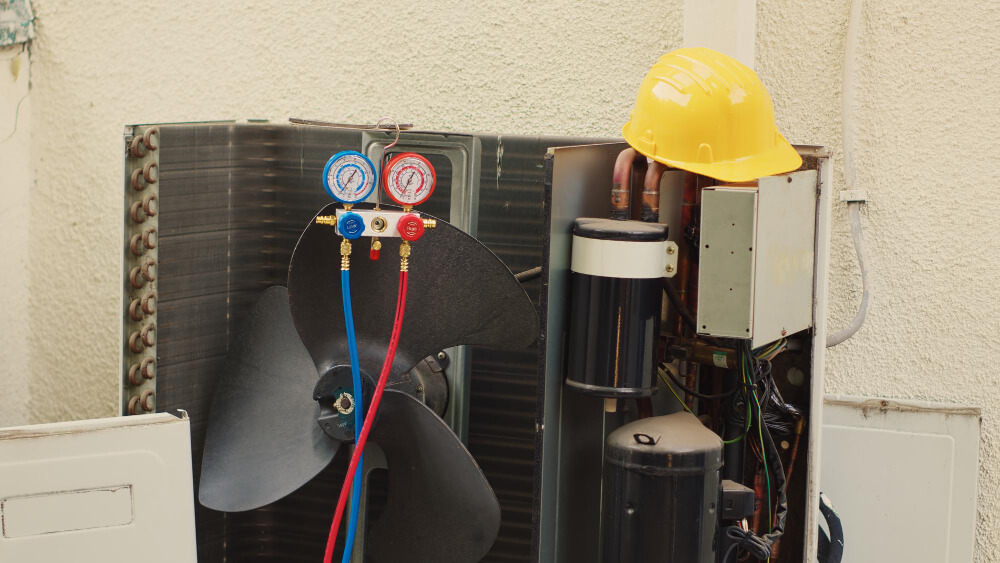
Why Correct Sizing is CRITICAL:
Undersized system (too small):
- ❌ Can’t reach the desired temperature
- ❌ Runs constantly (short lifespan)
- ❌ High energy bills (inefficient operation)
- ❌ Poor humidity control
Oversized system (too large):
- ❌ Short cycling (frequent on/off)
- ❌ Reduced lifespan (stress on components)
- ❌ Poor humidity control (doesn’t run long enough)
- ❌ Higher upfront cost
- ❌ Comfort issues (temperature swings)
Read more: Inefficient heating system costing you fines
Properly sized system:
- ✅ Reaches desired temperature
- ✅ Runs appropriate cycles
- ✅ Maximum efficiency
- ✅ Best humidity control
- ✅ Longest lifespan
- ✅ Lowest operating costs
Manual J Load Calculation (REQUIRED)
What is Manual J? Industry-standard calculation (by Air Conditioning Contractors of America) that determines exact heating/cooling needs.
What Manual J considers:
- Home square footage
- Ceiling height
- Insulation levels (walls, attic, basement)
- Window quantity, size, direction, and quality
- Door quantity and quality
- Air leakage rate
- Occupancy
- Climate zone
- Sun exposure
- Internal heat sources (appliances, lighting)
Cost: $200-$500 (should be included in installation, but verify!)
CRITICAL: Never accept “rule of thumb” sizing (e.g., “400 sq ft per ton”). This is WRONG and leads to problems.
Rough Sizing Guidelines (FOR REFERENCE ONLY):
These are rough estimates – ALWAYS get a Manual J calculation!Home Size Typical AC Size Typical Furnace Size 600-1,000 sq ft 1.5-2 ton 40K-60K BTU 1,000-1,500 sq ft 2-2.5 ton 50K-70K BTU 1,500-2,000 sq ft 2.5-3.5 ton 60K-90K BTU 2,000-2,500 sq ft 3-4 ton 80K-110K BTU 2,500-3,000 sq ft 4-5 ton 100K-130K BTU 3,000-3,500 sq ft 5-6 ton 120K-150K BTU
Variables that affect sizing:
- Climate: Hot/cold climates need larger systems
- Insulation: Poor insulation needs a larger system
- Windows: Many/large windows need a larger system
- Ceiling height: Vaulted ceilings need a larger system
- Sun exposure: South/west-facing windows need more cooling
HVAC Installation Cost Factors
What Affects Installation Labor Cost:
1. Straightforward Replacement: $1,500-$3,000
- Same system type (AC for AC, furnace for furnace)
- Same size
- Same location
- Existing ductwork is in good condition
- No electrical/gas modifications needed
2. Standard Installation: $2,500-$5,000
- Minor ductwork modifications
- Thermostat upgrade
- Minor electrical work
- Standard access/location
3. Complex Installation: $4,000-$8,000+
- Major ductwork modifications
- Electrical panel upgrade required
- Gas line modifications
- Difficult access (attic, crawl space)
- Zoning system installation
- Air quality systems added
Installation Add-Ons & Upgrades:
Ductwork Modifications: $1,500-$5,000
- Sealing leaky ducts: $500-$1,500
- Minor duct repairs: $500-$1,500
- Rerouting ducts: $1,000-$3,000
- Complete duct replacement: $3,000-$10,000
Electrical Upgrades: $500-$3,000
- New circuit from panel: $300-$800
- Electrical disconnect: $150-$300
- Panel upgrade (if required): $1,500-$3,000
Gas Line Work: $500-$2,000
- Gas line extension: $500-$1,500
- New gas meter (if needed): $1,000-$2,000
Thermostat Upgrades:
- Programmable thermostat: $150-$300
- Smart thermostat (Nest, Ecobee): $250-$500
- Multi-zone controls: $500-$2,000
Air Quality Add-Ons:
- Whole-house humidifier: $400-$1,200
- Whole-house dehumidifier: $1,500-$3,000
- UV air purifier: $500-$1,500
- HEPA filtration: $1,000-$2,500
- Electronic air cleaner: $600-$2,000
Zoning System: $2,000-$7,000
- 2-zone system: $2,000-$4,000
- 3-zone system: $3,500-$6,000
- 4+ zone system: $5,000-$8,000+
Permits & Inspections: $100-$500
- Required for all HVAC replacements
- Varies by municipality
HVAC Replacement Cost by Location
Geographic cost variance: ±20-30%
Highest Cost Markets (+20-30% above national average):
San Francisco Bay Area:
- Central AC + Furnace: $9,000-$18,000
- Labor: $4,000-$8,000
- Factors: High labor rates, strict permits, seismic requirements
New York City Metro:
- Central AC + Furnace: $8,500-$17,000
- Labor: $3,500-$7,500
- Factors: Union labor, complex installations, building codes
Boston Metro:
- Central AC + Furnace: $8,000-$16,000
- Labor: $3,500-$7,000
- Factors: Cold climate (larger systems), historic buildings
Seattle Metro:
- Heat Pump: $8,000-$15,000
- Labor: $3,000-$6,500
- Factors: Heat pumps are popular, and high labor costs
Average Cost Markets (National Average):
Chicago Metro:
- Central AC + Furnace: $7,000-$14,000
- Labor: $3,000-$6,000
Denver Metro:
- Central AC + Furnace: $7,500-$14,500
- Labor: $3,000-$6,000
Phoenix Metro:
- Central AC focus: $5,000-$10,000
- Labor: $2,500-$5,000
Lower Cost Markets (-20-30% below national average):
Atlanta Metro:
- Central AC + Furnace: $6,000-$11,000
- Labor: $2,500-$5,000
Houston Metro:
- Central AC + Furnace: $5,500-$10,500
- Labor: $2,000-$4,500
Rural Areas:
- Central AC + Furnace: $5,000-$10,000
- Labor: $2,000-$4,000
Why variance:
- Labor rates ($50-$150/hr)
- Cost of living
- Climate requirements
- Competition (more contractors = lower prices)
- Permit complexity
Get ZIP-code-specific HVAC costs
Link to Cost Estimator
Hidden Costs of HVAC Replacement
What Most Homeowners Forget to Budget:
1. Ductwork Issues (20-30% of homes): $500-$5,000
- Leaky ducts reduce efficiency by 20-30%
- Repair/sealing: $500-$1,500
- Replacement: $3,000-$10,000
- Discovery: Often found during installation
2. Electrical Panel Upgrade: $1,500-$3,000
- Required if the current panel lacks capacity
- Older homes (pre-1990) often need an upgrade
- High-efficiency systems draw more power
3. Gas Line Modifications: $500-$2,000
- Undersized gas line for new furnace
- Gas meter upgrade
- Pressure testing required
4. Asbestos Duct Wrap Removal: $1,500-$5,000
- Homes built before 1980
- Must be removed by a licensed professional
- Required before ductwork modification
5. Condensate Drain Issues: $200-$1,000
- New drain line installation
- Condensate pump (if needed): $150-$500
6. Refrigerant Line Replacement: $500-$1,500
- Old lines are incompatible with the new refrigerant
- Longer line runs are needed
7. Improved Ventilation: $300-$2,000
- Furnace venting upgrades (high-efficiency)
- May require new venting through the roof/wall
8. Air Sealing & Insulation (recommended): $1,000-$5,000
- Maximize new system efficiency
- Seal air leaks: $500-$1,500
- Add attic insulation: $1,500-$3,000
9. Disposal Fees: $100-$300
- Remove and dispose of old equipment
- Refrigerant recovery (EPA required)
10. Warranty Registration & Maintenance Plan: $200-$800
- Extended warranty: $200-$500
- Annual maintenance plan: $200-$400/year
ALWAYS Budget 10-15% Contingency
For $10,000 HVAC replacement:
- Budget $11,000-$11,500 total
Contingency covers:
- Ductwork issues discovered
- Electrical/gas upgrades needed
- Permit delays
- Unexpected compatibility issues
HVAC Energy Savings & ROI
Annual Energy Savings by Climate:
Hot Climate (Phoenix, Miami, Houston):
- Primary use: Air conditioning (2,000+ hours/year)
- Upgrading 10 SEER → 16 SEER: $400-$700/year savings
- Payback period: 7-12 years
Cold Climate (Minneapolis, Chicago, Boston):
- Primary use: Heating (1,500+ heating hours/year)
- Upgrading 60% AFUE → 92% AFUE: $600-$900/year savings
- Payback period: 6-10 years
Mixed Climate (Atlanta, Seattle, Denver):
- Balanced heating + cooling
- Complete system upgrade: $500-$1,000/year savings
- Payback period: 8-14 years
Energy Savings Calculator Example:
Home: 2,000 sq ft, mixed climate
Current system: 12 SEER AC + 70% AFUE furnace (20 years old)
New system: 16 SEER AC + 92% AFUE furnace
Current annual costs:
- Cooling: $850 (10 SEER equivalent efficiency with age)
- Heating: $1,400
- Total: $2,250/year
New system annual costs:
- Cooling: $550 (16 SEER)
- Heating: $900 (92% AFUE)
- Total: $1,450/year
Annual savings: $800/year
New system cost: $11,000
Payback period: 13.75 years
20-year savings: $16,000 (minus $11,000 cost) = $5,000 net savings
Plus: Improved comfort, reliability, and avoided repair costs
Additional Financial Benefits:
1. Utility Rebates: $300-$2,000+
- Many utilities offer rebates for high-efficiency systems
- Check: (Database of State Incentives)
- Typical rebates: $300-$500 (AC), $500-$1,000 (furnace)
2. Federal Tax Credits (2024-2025):
- Heat pumps: Up to $2,000 (30% of cost, max $2,000)
- Central AC: Up to $600 (30% of cost, max $600)
- Gas furnace (95%+ AFUE): Up to $600
- Requirements: ENERGY STAR certified, primary residence
- Details
3. Avoided Repair Costs: $300-$1,000/year
- Old systems require frequent repairs
- Average repair: $300-$800
- Major repairs (compressor, heat exchanger): $1,500-$3,000
4. Home Value Increase: $2,500-$7,500
- New HVAC increases home value by 40-60% of the cost
- $10,000 system adds $4,000-$6,000 to value
- Critical for home sales (buyers want new systems)
5. PICO Score Impact: +10-20 points
- Old HVAC (15+ years): -8-15 points
- New high-efficiency: +10-20 points
- Affects appraisals, financing, and insurance
HVAC Brands Comparison
Budget Brands ($): Lower Cost, Shorter Warranty
Goodman / Amana:
- Cost: 20-30% below mid-tier
- Warranty: 10 years parts (with registration)
- Pros: Affordable, adequate performance, widely available
- Cons: Shorter lifespan, noisier, fewer features
- Best for: Budget-conscious, basic needs, rental properties
Coleman / York (entry models):
- Cost: 15-25% below mid-tier
- Warranty: 10 years parts
- Pros: Reliable, decent performance
- Cons: Limited features
- Best for: Basic, reliable system, tight budget
Mid-Tier Brands ($$): Best Value
Rheem / Ruud:
- Cost: Industry average
- Warranty: 10 years parts, 1-5 years labor (varies)
- Pros: Excellent reliability, good efficiency, strong warranty
- Cons: Mid-range features
- Best for: Best value overall, most homeowners
Trane:
- Cost: 10-20% above average
- Warranty: 10-12 years parts (with registration)
- Pros: Very reliable, durable, strong dealer network
- Cons: Higher cost
- Best for: Long-term reliability focus
American Standard:
- Cost: Similar to Trane (same parent company)
- Warranty: 10 years parts
- Pros: Reliable, good quality, similar to Trane
- Best for: Trane quality at a slightly lower price
Premium Brands ($$$): Top Performance
Carrier:
- Cost: 20-40% above average
- Warranty: 10 years parts (Infinity series)
- Pros: Top efficiency, advanced features, excellent humidity control
- Cons: Expensive, complex (more service needed)
- Best for: Maximum efficiency, smart home integration
Lennox:
- Cost: 25-45% above average
- Warranty: 10 years parts (Dave Lennox Signature)
- Pros: Highest SEER available (26+), quietest operation, premium features
- Cons: Very expensive, requires quality installation
- Best for: Premium homes, maximum comfort
Bryant:
- Cost: 15-30% above average
- Warranty: 10 years parts
- Pros: Carrier quality at a lower price (same parent company)
- Best for: Premium performance, better value than Carrier
Brand Reliability Ratings (Consumer Reports):
Most Reliable:
- Trane ⭐⭐⭐⭐⭐
- American Standard ⭐⭐⭐⭐⭐
- Rheem/Ruud ⭐⭐⭐⭐⭐
Above Average: 4. Carrier ⭐⭐⭐⭐ 5. Lennox ⭐⭐⭐⭐ 6. Bryant ⭐⭐⭐⭐
Average: 7. Goodman ⭐⭐⭐ 8. Amana ⭐⭐⭐ 9. Coleman ⭐⭐⭐
Key insight: Mid-tier brands (Rheem, Trane, American Standard) offer the best reliability-to-cost ratio.
Finding the Right HVAC Contractor
HVAC installation quality matters MORE than equipment brand
Poor installation can reduce efficiency 30-50%, void warranties, and shorten lifespan.
What to Look For:
✅ Licensed & insured (verify independently)
✅ NATE certified technicians (North American Technician Excellence)
✅ Performs Manual J load calculation (proper sizing critical)
✅ 3-5 recent references (similar system types)
✅ Detailed written estimate (equipment + labor itemized)
✅ Offers multiple options (good/better/best)
✅ Explains efficiency ratings (SEER, AFUE, HSPF)
✅ Warranty details in writing (parts + labor)
✅ Local established business (10+ years preferred)
✅ Proper permits (always required)
Questions to Ask HVAC Contractors:
Sizing & Load Calculation:
- “Will you perform a Manual J load calculation?” (Required!)
- “How did you determine system size?”
- “Can I see the load calculation results?”
Installation Details: 4. “How many installers? How long will installation take?” 5. “Will you inspect/test ductwork?” 6. “What electrical/gas work is included?”
Equipment: 7. “Which brands do you recommend and why?” 8. “What SEER/AFUE ratings do you suggest for my home?” 9. “Can you explain efficiency differences?”
Cost & Warranty: 10. “What’s included in the price?” (Get itemized breakdown) 11. “What warranty comes with equipment? With labor?” 12. “Are rebates/tax credits included in the estimate?”
Permits & Quality: 13. “Will you obtain all required permits?” 14. “How do you ensure quality installation?” 15. “Do you offer maintenance plans?”
Red Flags with HVAC Contractors:
🚩 Sizes system by square footage only (no Manual J)
🚩 Pressure to choose the highest SEER (overselling efficiency)
🚩 “One size fits all” mentality
🚩 Significantly lower bid than others (30%+ lower)
🚩 Can start immediately (quality contractors booked 1-4 weeks out)
🚩 Refuses to explain efficiency ratings
🚩 No written estimate
🚩 Asks for 50%+ payment upfront
🚩 Plans to skip permits
🚩 No license/insurance verification
Getting Multiple Bids:
Get 3-5 quotes with the same specifications:
What to compare:
- System size (tons/BTU)
- Efficiency ratings (SEER/AFUE/HSPF)
- Brand and model number
- Warranty (parts + labor)
- Installation inclusions
- Total price
- Timeline
Typical bid range: $7,000-$14,000 for a complete system
- If bids vary >30%, question why
- Verify the same system specifications
Find Pre-Vetted HVAC Contractors
Licensed professionals with NATE certification
HVAC Replacement Timeline
Typical Installation Timeline:
1-2 Weeks Before Installation:
- Get 3-5 contractor quotes
- Compare bids, select contractor
- Contractor orders equipment (3-7 days lead time)
- Schedule installation date
- Contractor applies for permits (1-3 days processing)
Installation Day(s):
Day 1 (AC + Furnace): 6-12 hours
- Remove old equipment (2-3 hours)
- Install new furnace (2-3 hours)
- Install new AC condenser + evaporator coil (2-3 hours)
- Connect systems, test (1-2 hours)
- Final inspection (30-60 minutes)
AC Only or Furnace Only: 4-8 hours (single day)
Complex Installations: 2-3 days
- Major ductwork modifications
- Electrical panel upgrades
- Zoning system installation
- Multiple systems/floors
Inspection & Permit Sign-Off:
Next Day: Inspector visit (30-60 minutes)
- Verify proper installation
- Check electrical connections
- Test gas lines (if applicable)
- Verify venting
- Permit sign-off
If Inspection Fails: 1-3 days re-work + re-inspection
Best Time to Replace HVAC:
Spring (April-May):
- ✅ Before cooling season (preparation)
- ✅ Moderate demand (better scheduling)
- ✅ Potential discounts (10-15% off)
Fall (September-October):
- ✅ Before heating season (preparation)
- ✅ Moderate demand
- ✅ Potential discounts (10-15% off)
Avoid if Possible:
Summer (June-August):
- ❌ Peak AC demand (hot! emergencies common)
- ❌ Higher prices (15-25% premium)
- ❌ Longer wait times (2-4 weeks)
Winter (December-February):
- ❌ Peak heating demand (cold! emergencies)
- ❌ Higher prices (15-25% premium)
- ❌ Difficult installations (weather)
Emergency Replacements:
- Expect a 20-30% price premium
- Limited contractor availability
- May need a temporary heating/cooling solution
How HVAC Replacement Affects Home Value & PICO Score
Home Value Impact:
New HVAC systems add 40-60% of replacement cost to home value.
Example: $10,000 HVAC replacement
- Home value increase: $4,000-$6,000
- ROI at sale: 40-60%
- Plus: Faster sales (buyers want new systems)
Why HVAC matters to buyers:
- Expensive to replace ($5K-$15K)
- Critical for comfort
- Affects energy bills
- Indicates home maintenance quality
PICO Score Impact:
| HVAC System Age | PICO Impact | What It Means |
|---|---|---|
| 0-5 years (new) | +10-20 points | Excellent condition, efficient |
| 6-10 years | +5-10 points | Good condition, normal |
| 11-15 years | 0 points | Approaching replacement, neutral |
| 16-20 years | -5-10 points | Old, may need replacement soon |
| 20+ years | -10-20 points | Very old, replacement imminent |
| Non-functional | -20-35 points | Major red flag for lenders |
Why PICO Matters for HVAC:
Lower PICO scores (old/broken HVAC) cause:
- ❌ Appraisal 3-8% below market value
- ❌ Buyer financing difficulties (FHA/VA may require replacement)
- ❌ Higher insurance premiums
- ❌ Slower sales (60+ days longer on market)
Example:
- Home: $350,000 asking price
- 25-year-old HVAC, barely functional
- PICO score: 45/100 (old systems)
- Appraisal: $330,000 (6% reduction)
- Buyer financing gap: $20,000
After $10,000 HVAC replacement:
- New HVAC: PICO score 75/100
- Appraisal: $356,000 (home value + system value)
- Net gain: $26,000 ($356K – $330K)
- ROI: 160% ($16,000 gain on $10,000 investment)
Check Your Home’s PICO Score
See how your HVAC affects property value
HVAC Replacement Mistakes to Avoid
Top 10 Costly Mistakes:
1. Improper Sizing (Most Common)
- Mistake: Contractor sizes by the square footage rule-of-thumb
- Cost: 20-30% efficiency loss, $300-$800/year wasted
- Prevention: Require Manual J load calculation
2. Choosing Highest SEER Without ROI Analysis
- Mistake: Paying $3K-$5K extra for 20+ SEER in mild climate
- Cost: Never recoups premium cost (payback >20 years)
- Prevention: Calculate payback based on your climate
3. Ignoring Ductwork Condition
- Mistake: New system with leaky ducts (30% efficiency loss)
- Cost: $300-$600/year wasted energy
- Prevention: Duct inspection/sealing included
4. Skipping Manual J (Proper Sizing)
- Mistake: “Same size as old unit” approach
- Cost: Incorrect sizing = comfort issues + efficiency loss
- Prevention: Insist on a Manual J calculation
5. Lowest Bid = Best Deal
- Mistake: Choosing a contractor solely on price
- Cost: Poor installation voids warranty, reduces efficiency by 30-50%
- Prevention: Compare total value (warranty, quality, references)
6. Forgetting About Ductwork
- Mistake: Assuming existing ducts are fine
- Cost: 20-30% efficiency loss, $300-$600/year
- Prevention: Duct inspection mandatory
7. DIY Installation to “Save Money.”
- Mistake: Complex system requires licensing/permits
- Cost: Voided warranty, safety hazards, code violations, $5K-$15K to fix
- Prevention: ALWAYS hire a licensed professional
8. No Maintenance Plan
- Mistake: Skip annual maintenance ($150-$300/year)
- Cost: Reduced efficiency, shorter lifespan, voided warranty
- Prevention: Schedule annual tune-ups
9. Ignoring Thermostat Upgrade
- Mistake: New efficient system with old thermostat
- Cost: 10-15% efficiency loss
- Prevention: Upgrade to programmable/smart thermostat ($150-$500)
10. Forgetting Rebates & Tax Credits
- Mistake: Not researching incentives
- Cost: Missing $500-$2,000+ in savings
- Prevention: Check DSIRE database, ENERGY STAR website
HVAC Replacement Financing Options
How to Finance $5,000-$15,000 Projects:
1. HVAC Contractor Financing ⭐⭐⭐⭐
- Best for: $3K-$15K, immediate need
- Typical terms: 0% for 12-24 months (promotional)
- After promo: 15-25% APR (pay off before!)
- Pros: Easy approval, fast funding, through a contractor
- Cons: High rates after promo, read fine print
2. Home Equity Line of Credit (HELOC) ⭐⭐⭐⭐⭐
- Best for: $5K-$20K, have home equity
- Current rates: 7-9% variable
- Pros: Low rate, tax-deductible, flexible
- Cons: Variable rate, home is collateral
- Requirements: 15-20% equity, 680+ credit
3. Personal Loan ⭐⭐⭐⭐
- Best for: $3K-$15K, no home equity
- Current rates: 8-18% (depends on credit)
- Pros: Fast approval, no collateral
- Cons: Higher rates, not tax-deductible
- Requirements: 660+ credit, stable income
4. Credit Card (0% Intro) ⭐⭐⭐
- Best for: $3K-$8K, can pay off in 12-18 months
- Pros: 0% interest during promo, rewards
- Cons: High rate after promo (20-28%), discipline required
- Best practice: Pay off before promo ends
5. Home Equity Loan ⭐⭐⭐⭐
- Best for: $8K-$20K, prefer fixed rate
- Current rates: 7.5-10% fixed
- Pros: Fixed rate, predictable payment, tax-deductible
- Cons: Closing costs ($500-$1,000)
- Requirements: 15-20% equity, 680+ credit
6. Emergency Fund / Cash ⭐⭐⭐⭐⭐
- Best for: Have savings available
- Pros: No interest, no debt
- Cons: Depletes emergency fund
- Best practice: Replenish the emergency fund immediately
Financing Comparison for $10,000 HVAC System:
| Option | Rate | Term | Monthly Payment | Total Cost |
|---|---|---|---|---|
| Cash | 0% | N/A | N/A | $10,000 |
| Contractor 0% Promo | 0% then 20% | 18 mo promo | $556 | $10,000 (if paid in promo) |
| HELOC | 8% | 10 years | $121 | $14,520 |
| Personal Loan | 12% | 5 years | $222 | $13,320 |
| Credit Card 0% Promo | 0% then 25% | 15 mo promo | $667 | $10,000 (if paid in promo) |
Best value: Contractor 0% financing OR HELOC (lowest total cost + tax benefits)
HVAC Replacement Planning Checklist
6-12 Months Before (If Possible):
- Monitor current system performance (age, efficiency, repair frequency)
- Start researching HVAC options (types, brands, efficiency)
- Save for replacement ($300-$800/month for 12-18 months)
- Research utility rebates available
- Understand federal tax credits (up to $2,000)
1-2 Months Before:
- Get 3-5 contractor quotes (compare apples-to-apples)
- Verify each contractor’s license & insurance
- Check contractor references (3-5 per contractor)
- Request the Manual J load calculations from each
- Compare bids (equipment, efficiency, warranty, price)
- Research financing options (if needed)
- Apply for rebates/tax credits (understand requirements)
2-4 Weeks Before:
- Select contractor (not just lowest bid!)
- Review and sign the detailed contract
- Confirm equipment specifications (brand, model, SEER/AFUE)
- Confirm warranty details (parts + labor)
- Schedule installation date
- Contractor orders equipment (verify lead time)
- Contractor applies for permits
- Arrange time off work (be home for installation)
During Installation:
- Be present for installation (monitor work)
- Ask installer questions (how to operate, maintenance needs)
- Verify all equipment matches the contract
- Test the system before the installer leaves
- Get a copy of the permit and inspection schedule
- Save all documentation (receipt, warranty cards, manuals)
After Installation:
- Permit inspection completed (verify sign-off)
- Register equipment warranty (online, typically within 60 days)
- Change thermostat batteries (if applicable)
- Schedule annual maintenance (within the first year)
- Submit rebate applications (within deadlines)
- File tax credit paperwork (IRS Form 5695)
- Update home insurance (higher value, potentially lower rates)
- Keep all documentation (resale value proof)
Frequently Asked Questions
How much does it cost to replace an HVAC system?
HVAC replacement costs $3,500-$8,000 for AC only, $3,000-$8,000 for furnace only, $7,000-$14,000 for complete AC + furnace system, and $6,500-$13,500 for heat pump. Costs depend on system size (1.5-5 tons), efficiency (14-20 SEER), brand, and installation complexity.
How long does an HVAC system last?
Air conditioners last 15-20 years, gas furnaces 15-25 years, and heat pumps 12-18 years. Lifespan depends on the quality of installation, maintenance frequency (annual tune-ups recommended), climate extremes, and usage intensity. Well-maintained systems in mild climates last longest.
What size HVAC system do I need?
HVAC size depends on the Manual J load calculation, which considers square footage, insulation, windows, climate, and more. Rough guidelines: 1,000-1,500 sq ft needs 2-2.5 tons, 1,500-2,000 sq ft needs 2.5-3.5 tons, 2,000-2,500 sq ft needs 3-4 tons. ALWAYS get a Manual J calculation: sizing by square footage alone is incorrect.
Is higher SEER worth the cost?
Higher SEER is worth it in hot climates (2,000+ cooling hours/year) or with high electricity rates. In hot climates, 18 SEER pays back in 8-12 years. In mild climates, 16 SEER offers the best value: 20+ SEER may never pay back the premium cost. Calculate payback for your specific situation.
Should I replace AC and furnace at the same time?
Yes, if both are 12+ years old or one has failed. Benefits: 10-15% package discount, matched system efficiency, coordinated warranties, one installation disruption, and better financing terms. Replace separately only if one system is newer (<8 years) and functioning well.
What is the most efficient HVAC system?
Heat pumps are most efficient in mild climates (COP 3-4, meaning 3-4 units of heat per 1 unit of electricity). In cold climates, dual fuel systems (heat pump + gas furnace) offer the best year-round efficiency. Single-fuel: 96-98% AFUE gas furnaces most efficient for heating, 20+ SEER AC most efficient for cooling.
Can I install HVAC myself to save money?
No. HVAC installation requires: professional licenses, EPA refrigerant handling certification, permits and inspections, specialized tools ($2K-$5K), proper sizing calculations (Manual J), electrical knowledge (safety hazard), and gas line work (licensed required). DIY installation voids all warranties and creates safety hazards. Always hire a licensed professional.
What rebates are available for HVAC replacement?
Utility rebates: $300-$2,000 (varies by utility and system efficiency). Federal tax credits: Up to $2,000 for heat pumps, $600 for central AC, $600 for 95%+ AFUE furnaces (through 2032). State/local programs vary.
How much can a new HVAC system save on energy bills?
Savings depend on the old system’s age and the new system’s efficiency. Typical savings: Replacing 20-year-old system: $500-$1,000/year (40-50% reduction). Replacing 15-year-old system: $300-$600/year (25-35% reduction). Savings higher in extreme climates (hot or cold) and with high energy usage.
What maintenance does a new HVAC system need?
Annual professional maintenance ($150-$300/year) required: spring AC tune-up (clean coils, check refrigerant, test capacitor), fall furnace tune-up (clean burner, check gas pressure, test safety controls). Monthly homeowner tasks: replace air filter, clear outdoor unit debris. Regular maintenance extends the lifespan by 5-10 years and maintains efficiency.

Written by Billy Guteng. January 13, 2026
Billy is a content writer for Kukun. He was born in France, and has lived in multiple cities around the world ever since. He loves art, design and architecture as well as construction and real estate.
Top blog posts










See more >
Recommended

Join our newsletter
Get helpful renovation tips, insightful home maintenance articles, real estate market trends, and more.
Please enter a name
Please enter a valid e-mail