The “Hidden Equity” Audit: How to Use Predictive Analytics to Time Your Sell
Updated Fri, Feb 27, 2026 - 5 min read
Top blog articles
We’ve all been there. Stalking our own home value online like it’s a long-lost high school sweetheart. You check the major real estate sites, see a number, and either celebrate or shrug. But here’s the secret: that number is usually looking in the rearview mirror. It tells you what happened last month, not what’s happening next year.
If you want to sell your home for the absolute maximum price, you need to stop looking at past sales and start looking at Predictive Analytics.
At Kukun, we call this the “Hidden Equity” Audit. It’s the process of looking at the data points that traditional appraisals miss (like neighborhood investment trends and permit activity) to find the perfect window to list your property.
What is “Hidden Equity”?
Hidden equity isn’t about the upgrades you’ve already made; it’s about the value your neighborhood is creating for you.
When your neighbors pull permits for high-end kitchen remodels, or when a new luxury mixed-use development is approved three blocks away, the “ceiling” for property values in your zip code rises. This is known as positive gentrification pressure. According to the National Association of Realtors (NAR), neighborhood infrastructure and local investment are among the top drivers of home price appreciation.
By performing a “Hidden Equity” audit, you are essentially checking the pulse of your micro-market to see if your home is about to “draft” off the success of nearby investments.
How Predictive Analytics Beats the Standard AVM
Most Automated Valuation Models (AVMs) rely on “comps”: houses similar to yours that sold recently. But in a shifting market like 2026, comps can be outdated by the time the ink is dry.
Predictive analytics, like the Kukun Investment Outlook (KIO), looks at:
- Permit Density: How many people are investing in their homes nearby?
- Building Trends: Are people adding square footage (ADUs) or just doing basic repairs?
- The PICO™ Score: A proprietary way to measure a property’s condition relative to its neighbors.
How to Conduct Your Own “Hidden Equity” Audit
You don’t need a degree in data science to do this. You just need the right tools and a bit of curiosity.
1. Track the “Permit Pulse”
Check your local building department’s records or use a tool that aggregates this data. If you see a cluster of high-value permits (over $50k) in your immediate vicinity, your “hidden equity” is likely growing. This suggests that the neighborhood is “leveling up,” and buyers will soon be willing to pay a premium to live there.
2. Compare Your PICO™ Score
Your PICO™ Score tells you where your house stands in the “hierarchy” of the neighborhood. If your score is lower than the average of the homes being renovated around you, a small strategic remodel could unlock massive equity before you sell.
3. Analyze the “Buy-to-Reno” Ratio
Are investors buying homes in your area specifically to flip them? This is a massive leading indicator of a price surge. High investor activity usually precedes a 12–18 month window of peak pricing.
Timing the Market: The “Sweet Spot”
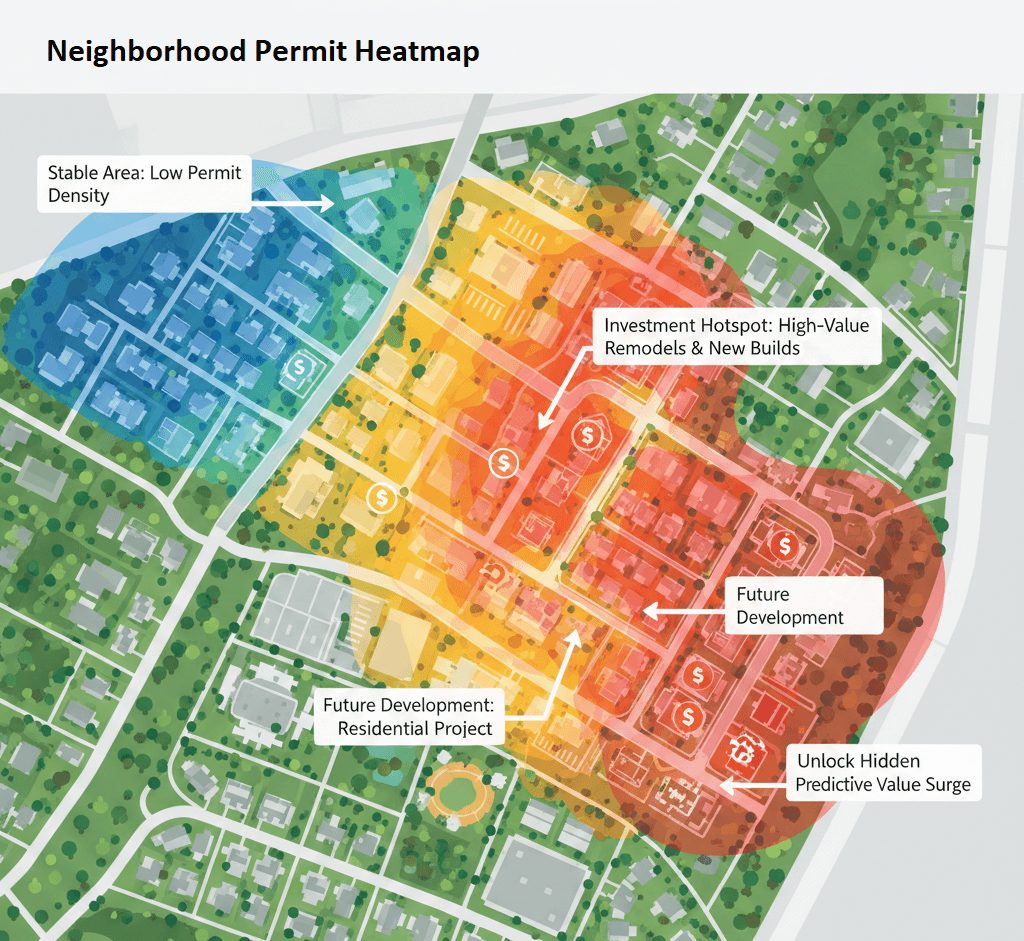
Timing the market isn’t about the time of year (though spring is still popular); it’s about the Investment Peak. You want to list your home just as the major renovations in your area are finishing. This allows you to benefit from the new, higher “comps” those renovations create without having to do the heavy lifting yourself.
If you’re a Realtor, using these analytics can help you win listings by proving to a seller that waiting six months (or listing now) is supported by data, not just “gut feeling.” For more on this, check out our guide on how Realtors use PrepToSell to close deals.
FAQs: Mastering Your Home Value Forecast
Q: Can predictive analytics predict a market crash? A: While no tool can account for global “black swan” events, predictive analytics are excellent at spotting localized bubbles. If permit activity suddenly craters while prices are still high, it’s often a sign that the local market is cooling.
Q: How does a “furred out” wall or soundproofing impact my predictive value? A: While specific small details don’t always show up in a permit, “high-quality finishes” are tracked in the PICO™ score. Better condition relative to your neighbors always translates to a higher predicted sale price.
Read more: Why a Fur Out Wall might be your best hidden upgrade
Q: Is it better to sell before or after a major neighborhood commercial project is finished? A: Generally, the “anticipation phase” (during construction) sees a steady rise, but the peak often occurs 6 months after completion once the convenience factor is fully realized by buyers.
Q: How often should I check my Hidden Equity? A: We recommend a “Hidden Equity” audit once every six months, or whenever you notice a “Notice of Proposed Development” sign in your neighborhood.
Read more: Why your homes guts determine your resale value?

Written by Billy Guteng. January 23, 2026
Billy is a content writer for Kukun. He was born in France, and has lived in multiple cities around the world ever since. He loves art, design and architecture as well as construction and real estate.
Top blog posts








See more >
Recommended

Join our newsletter
Get helpful renovation tips, insightful home maintenance articles, real estate market trends, and more.
Please enter a name
Please enter a valid e-mail