Goodbye Open Plan: Why 2026 is the Year of “Zoned Living” (and What it Costs)
Updated Thu, Feb 12, 2026 - 5 min read
Top blog articles
For nearly two decades, the “open-concept” floor plan reigned supreme. We knocked down walls to create seamless flows from the kitchen to the living room, effectively turning our homes into massive, interconnected halls. But in 2026, a collective realization has set in: we like our families, but we also like our peace and quiet.
The 2026 home is no longer just a place to sleep; it’s a co-working space, a virtual classroom, a gym, and a sanctuary. When everyone is in the same room, the “seamless flow” often becomes a “seamless cacophony.” This has sparked the Zoned Living Revolution.
Zoned living isn’t about returning to the dark, cramped rooms of the 1970s. It’s about “Broken Plan” design, creating intentional boundaries that allow for privacy and acoustic control while maintaining a sense of space. At Kukun, we’ve tracked a 40% increase in searches for “acoustic privacy,” and homeowners are now using our tools to figure out how to put the walls back in, without losing the light.
The Death of the Open Plan: What Changed?
The primary driver for zoned living is acoustic privacy in home design. In an open-plan house, sound travels unimpeded. The whir of the dishwasher competes with a Zoom call, while the television in the lounge area echoes into the kitchen.
Furthermore, “Open-Plan Fatigue” has set in. Homeowners are finding that these massive rooms are difficult to heat and cool efficiently, a major concern in 2026’s climate-conscious economy. By “zoning” your space, you can create micro-climates, significantly reducing your energy bills. This shift directly impacts your PICO™ Property Condition Score, as zoned homes are often seen as more energy-efficient and functionally diverse.
How to Divide a Large Room Without Walls: 4 “Zoning” Strategies
If you aren’t ready to build a permanent structural wall, there are several “soft zoning” techniques that are dominating 2026 design.
1. The Glass Partition (Crittall-Style)
This is the ultimate “best of both worlds” solution. Internal glass walls or sliding partitions allow light to pass through while completely blocking sound.
- The Cost: Expect to pay $150 – $300 per linear foot for high-quality tempered glass partitions.
- The ROI: High. Glass partitions are a massive 2026 trend that signals “luxury” to potential buyers.
2. Built-in Double-Sided Shelving
Using cabinetry to divide a space provides both a physical boundary and much-needed storage. Double-sided shelving allows you to display books or decor in both “zones.”+1
- The Cost: A custom floor-to-ceiling built-in unit typically ranges from $3,000 to $7,000.
- Kukun Tip: Use our Renovation Cost Estimator to compare the cost of custom cabinetry vs. a standard drywall partition.
3. Change in Levels (The Sunken Living Room)
A literal “step down” creates a psychological boundary. While this is more common in new builds, many 2026 renovations are using raised platforms for home offices or dining areas to create a “zone” without a single vertical barrier.
- The Cost: Raising a 10×12 section of a room can cost $2,500 – $5,000 in framing and new flooring.
4. Acoustic Slatted Panels
Wooden slatted panels (like fluted wood) provide visual separation and, more importantly, dampen sound. According to the Acoustical Society of America, soft surfaces and porous wood slats can reduce “reverb” in a room by up to 60%.
- The Cost: DIY-friendly acoustic panels cost roughly $15 – $25 per square foot.
The Financial Impact: Zoned Living vs. Open Plan 2026 Resale Value
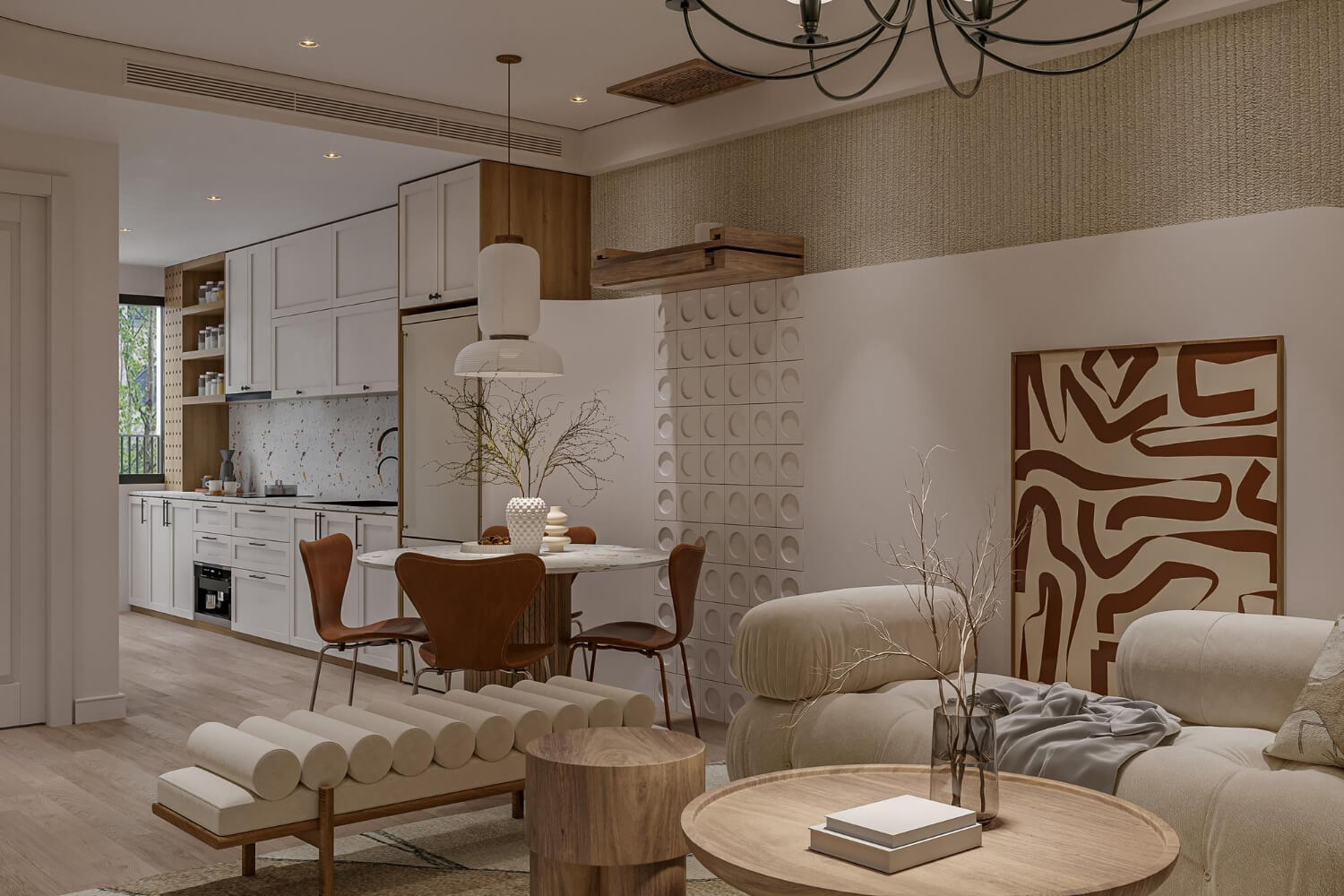
Does “closing off” your home hurt your resale value? In 2024, the answer might have been yes. In 2026, the answer is a definitive no.
Buyers are now specifically looking for “defined spaces.” A home that clearly offers a dedicated home office, a quiet reading nook, and a social kitchen is more valuable than a “blank slate” open floor plan. By using Kukun’s PrepToSell data, we’ve seen that homes with at least two “acoustically private” zones sell for 4-6% more than strictly open-concept homes in the same zip code.
What it Costs to Make the Switch: A 2026 Budget Guide
If you’re ready to dismantle the open plan, here is what you should expect to spend based on Kukun’s latest localized data.Project Type Average Cost (2026) Time to Complete PICO™ Impact Partial Drywall Partition $1,800 – $3,500 3-5 Days Moderate Internal Glass Sliders $5,000 – $12,000 1-2 Weeks High Custom Room Divider Cabinetry $4,500 – $8,500 2-3 Weeks High Soundproofing Existing Walls $1,200 – $2,800 2-3 Days Essential
FAQs: Navigating the Zoned Living Revolution
Q: Will adding a wall make my house feel smaller?
A: Not if you use glass or “partial” walls. The goal of zoned living is to create intimacy, not claustrophobia. Partial walls that stop 2 feet from the ceiling maintain the “visual volume” of the house while blocking sound.
Q: Is acoustic privacy expensive to achieve?
A: It can be. While heavy curtains and rugs help, true acoustic privacy requires “decoupling” the room. This might involve using a fur out wall with specialized sound-dampening insulation.
Q: Do I need a permit to add a room divider?
A: If it is a permanent structural wall or involves electrical work (like adding outlets to a new partition), yes. If it is a piece of “furniture” like a large bookshelf or a non-structural glass screen, usually no. Always check your local 2026 building codes.
Q: How do I know where to place the “zones”?
A: Use your home’s natural light. Place high-energy zones (kitchen, kids’ play area) near the brightest windows and quiet zones (office, reading nook) in the more shielded parts of the floor plan.
The Verdict: The Functional Future
The open plan was a design for a world where we only spent our evenings and weekends at home. Zoned living is a design for a world where our homes are the center of our universe. By investing in defined spaces and acoustic privacy, you aren’t just following a 2026 trend; you are future-proofing your home’s functionality and its value.

Written by Billy Guteng. February 12, 2026
Billy is a content writer for Kukun. He was born in France, and has lived in multiple cities around the world ever since. He loves art, design and architecture as well as construction and real estate.
Top blog posts










See more >
Recommended

Join our newsletter
Get helpful renovation tips, insightful home maintenance articles, real estate market trends, and more.
Please enter a name
Please enter a valid e-mail