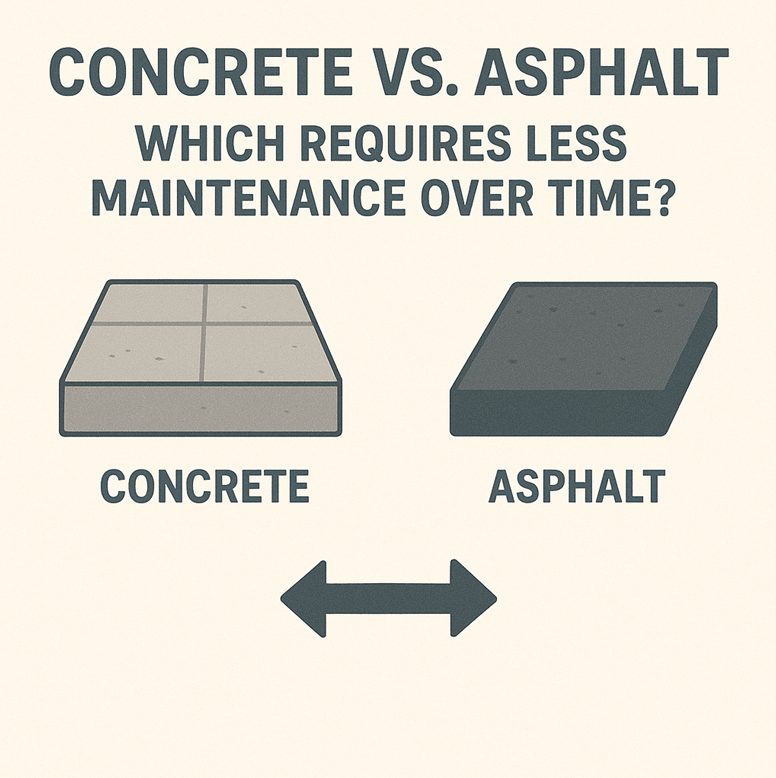
Concrete vs. Asphalt: Which Requires Less Maintenance Over Time?
Updated Fri, Aug 21, 2026 - 3 min read
Top blog articles
Sponsored Rates for October 2026
Compare Rates for Mortgage, Personal Loans and Home Equity


When it comes to paving roads, driveways, or parking lots, property owners are often faced with a critical decision: should they choose concrete or asphalt? Both materials are widely used and have their unique advantages, but one of the most important considerations is long-term maintenance. Understanding the differences in durability, maintenance requirements, and costs can help make a more informed choice.
Durability and Lifespan
Concrete is renowned for its durability and longevity. A well-constructed concrete surface can last anywhere from 30 to 50 years or more, depending on the climate and usage. Its rigid structure resists heavy loads and reduces the likelihood of potholes forming over time. Concrete is particularly well-suited for areas with high traffic or commercial use, where longevity is critical.
Asphalt, on the other hand, is a more flexible material, which allows it to handle temperature fluctuations better than concrete. However, this flexibility comes at the cost of a shorter lifespan. Standard asphalt pavements typically last between 15 to 20 years before requiring major repairs or resurfacing. While newer asphalt mixes and sealant technologies have extended its lifespan, asphalt generally does not match concrete in terms of long-term durability.
Maintenance Requirements
Concrete surfaces are relatively low-maintenance. They rarely require resurfacing and do not need frequent sealants. Periodic cleaning and occasional joint sealing are usually sufficient to maintain a concrete driveway or pavement. Cracks in concrete can be repaired using patching techniques, which are generally straightforward and cost-effective. However, concrete is more prone to surface spalling (chipping or flaking) in freeze-thaw climates, which may require localized repairs.
Asphalt requires more ongoing maintenance to preserve its integrity. Sealcoating is necessary every 2 to 3 years to protect against water, UV rays, and chemical spills such as oil or gasoline. Asphalt surfaces are more susceptible to cracking, potholes, and rutting under heavy use, and these issues often require prompt repairs to prevent further damage. Additionally, asphalt tends to soften in extreme heat and may become more brittle in cold weather, necessitating additional care in regions with harsh climates.
Cost of Maintenance
While concrete has a higher upfront cost (sometimes double that of asphalt) the maintenance costs over time are generally lower. The minimal need for sealants and repairs often offsets the initial investment, making concrete cost-effective over its lifespan. Its longevity also reduces the frequency of resurfacing or replacement, further saving on long-term expenses.
Asphalt is cheaper to install initially, which makes it appealing for budget-conscious projects. However, the recurring maintenance costs, including sealcoating, crack filling work, and occasional resurfacing, can accumulate over time. For homeowners or businesses looking at long-term savings, these ongoing expenses should be carefully considered.
Climate Considerations
The choice between concrete and asphalt also depends on climate. Concrete performs better in hot climates because it reflects sunlight and remains stable under heavy traffic. Asphalt, while more flexible in colder regions, may require more frequent attention to prevent cracking caused by freeze-thaw cycles. Therefore, the local climate can influence the long-term maintenance demands of each material.
Ultimately, when comparing concrete and asphalt for maintenance requirements over time, concrete generally has the edge. Its longer lifespan, lower susceptibility to wear and tear, and minimal need for ongoing treatments make it a low-maintenance choice for long-term use. Asphalt may be more suitable for short-term projects or for those with lower initial budgets, but it comes with higher maintenance demands over its lifespan. Property owners must weigh factors such as climate, traffic load, initial budget, and long-term goals to make the best decision for their paving needs.

Written by Alejandro Guerrero. July 1, 2026
With a mixed love between the sciences and the arts and a passion for reading, Alejandro has developed a background that allows him to discuss many subjects. Being home design one of them, he likes to share thoughts and tips on how to not to forget that those buildings we live in are our homes at the end.
Top blog posts









See more >
Recommended

Join our newsletter
Get helpful renovation tips, insightful home maintenance articles, real estate market trends, and more.
Please enter a name
Please enter a valid e-mail